How to Choose a Reliable Bulk Freeze-Dried Fruit Supplier
9 月-06-2026
Sourcing freeze-dried fruit in bulk involves more than comparing prices per kilogram. For food manufacturers, ingredient distributors, and private-label brands, the right supplier needs to deliver products that meet specifications, perform consistently in production, and arrive in suitable packaging.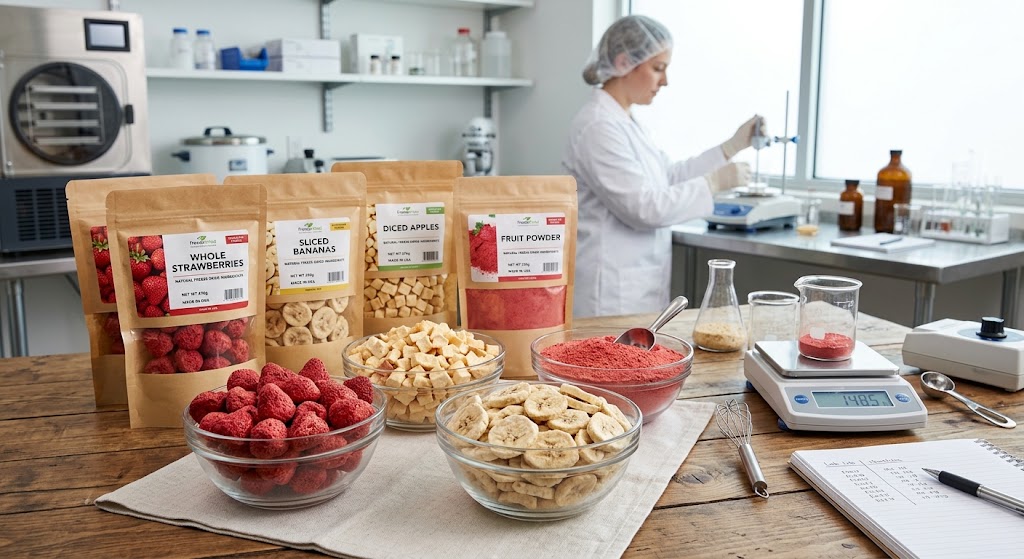
Before placing a bulk order, buyers should evaluate product specifications, quality controls, packaging, traceability, and supply terms. This guide explains what to check when choosing a bulk freeze-dried fruit supplier.
What Should Buyers Check First?
- Fruit type, format, and piece size
- Moisture specifications and product quality
- Ingredient declaration and processing information
- Packaging, shelf life, and storage requirements
- Quality documents, traceability, MOQ, and lead time
1. Confirm the Product Format for Your Application
Different food applications require different freeze-dried fruit formats. Before requesting a quotation, identify how the fruit will be used in your finished product.
Whole Fruit
For applications where recognizable fruit pieces and appearance are important.
Fruit Slices
Often used in snacks, cereals, bakery products, and decorative toppings.
Pieces and Crumbles
For blending, inclusions, and applications where smaller fruit formats are preferred.
Confirm the available formats and size tolerances directly with the supplier. Not every fruit type or cut is available from every manufacturer.
2. Check Product Specifications Before Comparing Prices
A quotation is only meaningful when the products being compared are defined in the same way. Request a specification sheet for the exact fruit product you intend to purchase.
| Specification | What Buyers Should Confirm |
|---|---|
| Fruit and format | Fruit type, cut size, and size tolerance |
| Moisture and water activity | Applicable specifications and test information |
| Ingredients | Fruit-only formulation, added ingredients, and pretreatment |
| Appearance and texture | Color, flavor, crispness, and breakage requirements |
| Packaging and storage | Pack size, storage conditions, and shelf life |
Buyer’s note: Agree on the relevant product specifications before comparing quotations. A shared specification makes it easier to identify meaningful differences between suppliers.
3. Evaluate Moisture, Color, Flavor, and Texture
Freeze-dried fruit is often chosen for its lightweight structure, recognizable appearance, and crisp texture. These qualities can be affected by processing, handling, and storage.
Moisture and Water Activity
Ask for the applicable moisture specification and water activity information where relevant. These are different measurements and should not be treated as interchangeable. Confirm how the product is protected from moisture after processing and during storage.
Color and Flavor
Review whether the sample has the expected fruit color, aroma, and flavor. Natural variation can occur, so agree on realistic acceptance criteria for the product.
Piece Integrity and Breakage
Check the proportion of intact pieces, smaller fragments, and fines. Excessive breakage may affect product appearance, dosing, and usable yield.
4. Review Ingredients and Processing Information
Do not assume that every freeze-dried fruit product contains only fruit. Confirm the actual formulation and processing information for the specific product being quoted.
- Is the product made from fruit only?
- Has the fruit undergone any pretreatment?
- Are added sugars, carriers, or other ingredients present?
- Can the supplier provide a complete ingredient declaration?
- Does the product meet the requirements of your target market?
For clean-label product development or regulated markets, use the ingredient declaration and supporting documentation rather than relying on broad marketing terms such as “natural.”
5. Check Packaging and Storage Requirements
Freeze-dried fruit should be protected from moisture and physical damage. Suitable packaging helps preserve product quality during storage and transportation.
Confirm food-contact suitability and moisture protection.
Check net weight and compatibility with warehouse handling.
Confirm the stated shelf life and applicable storage conditions.
Check outer packaging and handling requirements for transport.
6. Request Relevant Quality Documents
Ask the supplier which documents are available for the product and relevant production batch. Requirements vary by product, buyer approval procedures, and destination market.
Quality Document Checklist
- Product specification sheet
- Ingredient declaration and allergen information
- Certificate of Analysis (COA), where provided
- Applicable microbiological test results
- Relevant food safety or quality management certificates
- Batch identification and traceability information
- Shelf-life and storage information
Check certificate validity, issuing organization, scope, and whether it applies to the actual manufacturing facility. A COA should also be reviewed against the agreed specification and the relevant batch.
7. Assess Batch Consistency and Traceability
A successful sample does not automatically guarantee that every future batch will perform identically. For repeat orders, ask how the supplier manages batch identification, product checks, and traceability.
- How are finished products identified by batch?
- Which quality checks are carried out before shipment?
- How are nonconforming products handled?
- Can batch-related documents be provided when required?
- How are changes to specifications communicated?
For large-scale production, consider conducting a production trial. Record the approved sample and specifications so that later deliveries can be evaluated against a clear reference.
8. Compare Total Purchasing Cost, Not Just Price per Kilogram
The lowest quotation does not always represent the lowest overall purchasing cost. Differences in usable yield, packaging, freight, testing, and order requirements may affect the final calculation.
Before comparing offers, confirm that each supplier is quoting the same:
- Fruit type, format, and product specifications
- Packaging configuration and net weight
- Order quantity and delivery terms
- Quality documents and testing requirements
- Shipping destination and applicable commercial terms
Also confirm the minimum order quantity (MOQ), sample arrangements, current production lead time, and repeat-order process directly with each supplier.
9. Questions to Ask a Bulk Freeze-Dried Fruit Supplier
Use this checklist when contacting potential suppliers or reviewing a quotation.
| Topic | Questions to Ask |
|---|---|
| Product format | Which fruit types, cuts, and sizes are available? |
| Specifications | Can you provide the current product specification sheet? |
| Quality documents | Which test results and certificates are available? |
| Packaging | What packaging options and storage instructions do you provide? |
| Supply terms | What are the MOQ, sample arrangements, and current lead time? |
| Traceability | How are batches identified and checked against specifications? |
10. Choosing a Freeze-Dried Fruit Manufacturer for Long-Term Supply
For food manufacturers and ingredient distributors, supplier selection should focus on product suitability, documented quality requirements, and the ability to support the intended purchasing arrangement.
A practical process is to define the product requirements, request technical information, evaluate a representative sample, and confirm commercial and documentation requirements. Where necessary, conduct a production trial before approving the product for recurring orders.
Lixing Foods offers freeze-dried fruit products for food ingredient and related applications. Buyers can review the available range and contact the company to discuss their sourcing requirements.
Explore the freeze-dried fruit product range to identify options for your application.
Frequently Asked Questions
What should I look for in a bulk freeze-dried fruit supplier?
Review product specifications, ingredients, moisture-related requirements, packaging, quality documents, traceability, and supply terms. Request a representative sample and assess it against your intended application.
What documents should I request when buying freeze-dried fruit in bulk?
Common documents include a product specification sheet, ingredient declaration, applicable quality certificates, and a Certificate of Analysis where available. Additional documents may be required for specific markets or buyer approval procedures.
How can I compare quotes from different suppliers?
Compare the same fruit type, format, size, specifications, packaging, order quantity, documentation, and delivery terms. Price per kilogram alone may not reflect the full purchasing cost.
Does freeze-dried fruit need special packaging?
It should be protected from moisture and physical damage. The appropriate packaging depends on the product, pack size, storage conditions, and shipping arrangement.
Can I request samples before placing a bulk order?
Ask the supplier about sample availability. Evaluate appearance, flavor, texture, piece size, and suitability for production. For recurring supply, agree on specifications for future batches.
What is the most important factor when choosing a supplier?
The priority depends on your application. A suitable supplier should meet the agreed product specification, provide the required quality information, protect the product during storage and shipment, and support your purchasing requirements.
Looking for a Bulk Freeze-Dried Fruit Supplier?
Define your target fruit, preferred format, application, and specifications before requesting a quotation. These details help determine whether a product fits your production requirements.