Bulk Freeze Dried Mango: Slice vs Cubes, Packaging Options, and Quality Grades
12 月-22-2025
Quick Summary
Bulk freeze dried mango is typically purchased in two mainstream formats—slices and cubes—each optimized for different commercial uses. Slices are best for snack packs and premium “whole fruit” storytelling, while cubes suit cereal, bakery inclusions, and foodservice toppings where consistent piece size matters. The most important buying specs are moisture and water activity, cube/slice size tolerance and breakage rate, aroma retention, microbiological limits, and barrier packaging that prevents humidity pickup during shipping and storage. This guide explains how to choose the right format, how to read a spec sheet, and how buyers estimate the “right” storage and packaging setup for stable, repeatable product performance.
Why bulk freeze dried mango is a top SKU in global snack and ingredient markets
Mango is one of the few tropical fruits that performs well across multiple product categories at the same time: premium snack packs, cereal and granola, bakery inclusions, yogurt toppings, fruit tea blends, and functional drink mixes. For commercial buyers, bulk freeze dried mango solves two recurring problems: consistent taste across seasons and predictable dosing in manufacturing. Instead of managing the variability and spoilage risk of fresh mango, brands can lock a stable flavor profile and a controlled piece format that works in production lines.
If you are building a larger “mango cluster” on your site, it’s worth referencing an internal knowledge page such as a comprehensive mango reference guide and then bringing buyers back to format-specific products when they are ready to purchase.
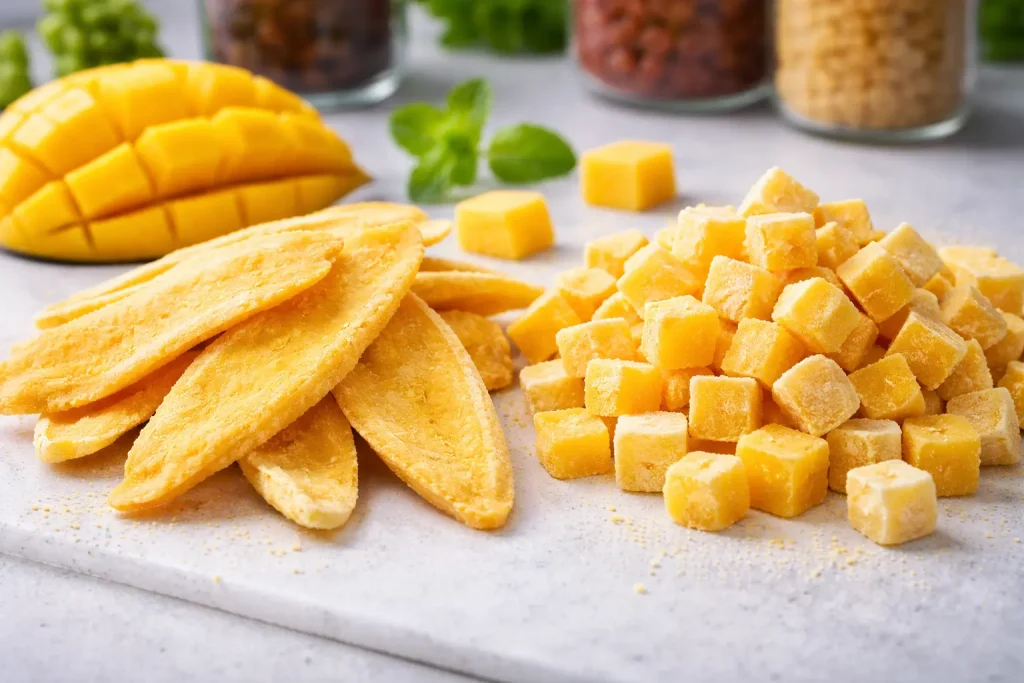
Slice vs cubes: which format fits your product strategy?
Most sourcing mistakes happen here. Buyers choose based on appearance, but forget to match format to production reality.
When mango slices are the better choice
Slices are designed for premium visual impact. They are ideal for products where the fruit piece is a hero ingredient that consumers can immediately recognize.
In practice, slices perform best for:
-
snack packs and gift-style assortments
-
premium topping kits for yogurt and ice cream
-
ecommerce bundles and sampler boxes
-
fruit tea garnishes where “whole fruit look” increases perceived value
A good slice program also depends on packaging that protects structure. If you’re positioning mango as a premium ingredient, you can pair the narrative with a fruit tea browsing link such as the freeze-dried fruit tea selection page to keep readers exploring adjacent applications without pushing them into hard selling too early.
When mango cubes are the better choice
Cubes are the workhorse format for manufacturers. They provide controlled size and predictable behavior in mixed matrices like cereal, bakery dough, and chocolate inclusions. Cubes are also more convenient for automated portioning and reduce the “too large / too fragile” issues that slices sometimes bring.
Cubes perform best for:
-
granola, muesli, cereal, trail mix
-
bakery inclusions (cookies, muffins, fillings)
-
confectionery (chocolate bars, clusters)
-
foodservice toppings where portion consistency matters
If your brand also offers multiple fruit powder formats, you can route R&D readers to the freeze-dried fruit powder options page as a complementary choice for flavor dosing when pieces are not practical.
Quality grades: what “good” actually means in commercial purchasing
Bulk buyers don’t win by chasing “the strongest aroma.” They win by buying consistent lots that behave the same in production and shipping.
Moisture content and water activity: stability starts here
For freeze dried mango, stability and crunch are strongly tied to moisture control. Moisture content shows how much water is present, while water activity indicates how available that water is for texture changes and microbial risk. Even excellent mango can become disappointing if it absorbs humidity during storage.
This is why the storage and packaging logic matters as much as the fruit itself. For general storage behavior, you can support the point with an internal reference such as how long dried fruits last in a freezer, while clarifying in your content that freeze dried pieces are especially sensitive to humidity pickup because of their porous structure.
Size tolerance and breakage rate: the hidden cost driver
Two suppliers can quote the same “cubes” and deliver completely different reality. Commercial buyers should request:
-
target cube size range and tolerance
-
percentage of fines/dust in each lot
-
breakage rate after transport simulation (or at least packaging method designed to prevent crushing)
For slices, ask about:
-
slice thickness consistency
-
percentage of fractured slices
-
packaging method that reduces compression during shipping
Aroma retention and sensory profile
The biggest complaint in mango sourcing is “it smells good in the bag, but tastes weak in the product.” That usually happens when the mango is overdried, the storage environment is too humid, or the product sits in oxygen-permeable packaging. Sensory evaluation should be done both “as-is” and in the intended matrix (cereal, yogurt, tea, etc.).
Microbiological limits and foreign matter controls
If mango is used in ready-to-eat products, buyers should confirm lot-based microbiological testing and foreign matter controls. This is less glamorous than “taste,” but it protects your brand.
Packaging options for bulk orders: how to prevent humidity pickup and crushing
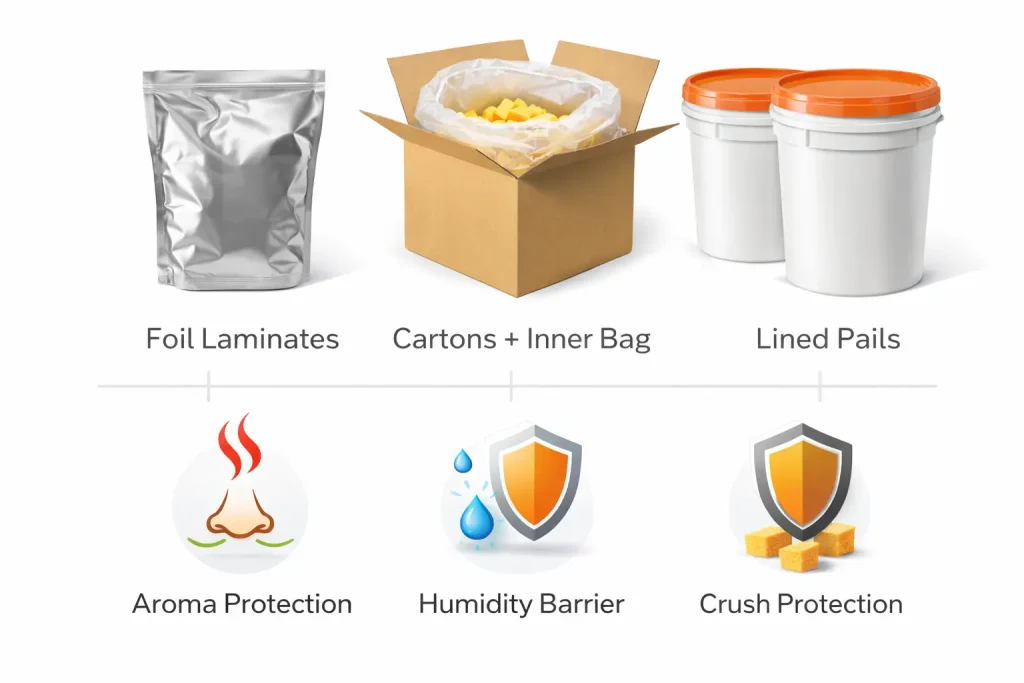
Freeze dried mango is low moisture, but it is highly hygroscopic. It will pull water from the air. Packaging is not a cosmetic choice; it’s the difference between stable crunch and soft, sticky disappointment.
Packaging formats used by commercial buyers
The most common bulk packaging routes include:
-
high-barrier foil laminate bags for aroma and humidity protection
-
multi-layer inner bag plus carton for logistics stability
-
food-grade pails/drums with liners for factory-scale volume handling
If you want a “browse more” link without naming a specific SKU, you can rotate in a neutral category jump such as this category page to keep the reading flow natural.
Storage rules that reduce returns
Bulk buyers typically implement:
-
humidity-controlled storage zones (more important than temperature)
-
immediate reseal discipline after opening
-
defined “use window” per bag once opened
-
FIFO rotation and sealed transfer containers on production floors
How to choose the right format by application
Snack packs and premium gifting
Choose slices when appearance matters most and you want consumers to “see the mango.” Use high-barrier packaging and protective packing to reduce fractures.
Cereal, granola, trail mix, and bars
Choose cubes for predictable piece size and better mechanical stability. Your goal is consistent distribution, not just taste.
Bakery inclusions and fillings
Cubes are often easier to scale in dough and fillings. If your recipe needs a fruit note without pieces, consider fruit powder formats as a complement.
Fruit tea blends
Slices add the best visual effect in tea kits. For a practical usage angle, you can also cross-reference lemon usage education such as what freeze-dried lemon slices can be used for, because tea buyers often purchase multiple fruits together and look for pairing ideas.
A buyer checklist: what to request before placing a bulk order
Minimum spec set to request
Commercial buyers should request:
-
moisture content and water activity targets with lot-based testing
-
piece size tolerance and percentage of fines/dust
-
packaging barrier details and recommended storage humidity
-
microbiological limits and testing frequency
-
packing method designed to reduce crushing during shipment
What to tell the supplier to speed up quoting
Quoting is faster when you share:
-
format preference (slices or cubes)
-
target application (snack packs, cereal, bakery, tea, foodservice)
-
packaging preference (bag, carton, pail/drum)
-
expected annual volume and target delivery window
If your sourcing plan includes other high-demand fruits, it can be useful to show a bulk reference product such as bulk natural organic freeze-dried banana as a parallel option for mixed assortments.
Practical example: one bulk mango SKU, three revenue channels
A single bulk mango cube SKU can support:
-
retail cereal or granola brands (texture + sweetness)
-
foodservice topping kits (portion consistency)
-
bakery inclusions (stable distribution)
A single bulk mango slice SKU can support:
-
premium snack packs
-
tea gift assortments
-
ecommerce bundles
The brands that scale fastest usually pick one “hero format” first, then add the second format only after stability and shipping performance are proven.
Common mistakes buyers make (and how to avoid them)
Choosing format based on photos only
Photos don’t reveal breakage rate, fines percentage, or humidity sensitivity. Always request a sample shipped in the same packaging method planned for bulk.
Ignoring humidity control during storage
Freeze dried mango can lose crunch quickly if storage humidity is uncontrolled. If you don’t have a humidity-controlled zone, upgrade packaging barrier and implement strict reseal SOPs.
Treating all “cubes” as interchangeable
Cube size tolerance and dust percentage can vary significantly. Make these specs part of your purchase contract.
Conclusion
Bulk freeze dried mango succeeds when format matches application and packaging matches logistics reality. Choose slices for premium visual storytelling and snack pack appeal, and choose cubes for manufacturing stability and consistent portioning in cereal, bakery, and foodservice. The most reliable purchasing decisions focus on moisture and water activity, size tolerance and breakage rate, microbiological controls, and barrier packaging that protects mango from humidity pickup. When those variables are controlled, you get repeatable taste, stable crunch, and fewer quality surprises across production and shipping.
Semantic Insight Loop
To size the right bulk mango program, define the application first, then lock format (slices for premium visibility, cubes for manufacturing consistency). Next, protect the format with barrier packaging and humidity discipline. Finally, standardize piece size tolerance and breakage rate as contractual specs so every shipment behaves the same in production, storage, and retail display.
FAQ
1) Should I buy freeze dried mango slices or cubes for commercial use?
Slices are best for snack packs, gifting, and premium visual presentation, while cubes are better for cereal, bakery, and foodservice applications where consistent piece size and portioning matter.
2) What specifications should I check when buying bulk freeze dried mango?
Commercial buyers typically check moisture content and water activity, piece size tolerance, percentage of fines or dust, breakage rate, microbiological limits, and barrier packaging performance against humidity.
3) Why does freeze dried mango lose crunch during storage?
Loss of crunch usually happens when mango absorbs humidity through weak packaging or improper resealing after opening. High-barrier packaging and humidity-controlled storage greatly reduce this risk.
4) What packaging is best for bulk freeze dried mango shipping?
High-barrier foil laminate bags, multi-layer inner bags with cartons, or food-grade pails/drums with liners are commonly used to prevent humidity pickup and protect pieces from crushing.
5) How do I reduce breakage in freeze dried mango slices during transport?
Use protective packing, avoid heavy compression in cartons, request packaging designed for structure protection, and test sample shipments using the same logistics method planned for bulk orders.