How Singapore Brands Choose Freeze-Dried Ingredients for Clean-Label Innovation and High-Consistency Production
12 月-28-2025
How Singapore Brands Choose Freeze-Dried Ingredients for Clean-Label Innovation and High-Consistency Production
In Singapore, “good enough” doesn’t ship—buyers expect traceable specs, predictable performance, and a premium sensory finish.
Singapore is a small market with a big influence. Brands here often act like regional “quality gatekeepers” for Southeast Asia: they develop products that must meet strict internal standards, satisfy ingredient-conscious consumers, and scale reliably across modern manufacturing lines. That’s why freeze-dried fruits, vegetables, and powders are increasingly used in Singapore’s beverage, dairy, bakery, and convenience-meal segments—because they offer strong natural character without introducing moisture risk, and they support precise formulation control.
If you want buyers to understand your ingredient scope quickly, a clean entry point is your portfolio page for Dried Foods. For teams already building powder-based formulations, your dedicated Freeze-Dried Fruit Powder collection is usually where the technical discussions start.

Singapore’s Buyer Mindset: “Proof First, Claims Later”
Singapore product teams typically buy with a verification mindset. They don’t just ask whether an ingredient tastes good—they ask whether it behaves the same in every batch, in every season, under real production constraints. You’ll see this in how they request samples, how they test, and how they decide.
They usually prioritise three fundamentals:
Consistency across lots, meaning stable flavour intensity, colour, particle behaviour, and rehydration or dispersion outcomes. Documentation readiness, meaning the supplier can support audits and internal quality review without delays. Application performance, meaning the ingredient delivers the intended consumer experience in the brand’s specific system—milk tea, functional beverages, instant soup, bakery premix, or dairy blends.
This is where a supplier with a clear capability story has an advantage. If buyers want to understand your manufacturing scale, export readiness, and certifications, your About Us page is the most direct reference.
Start With the System: Hot vs Cold Application
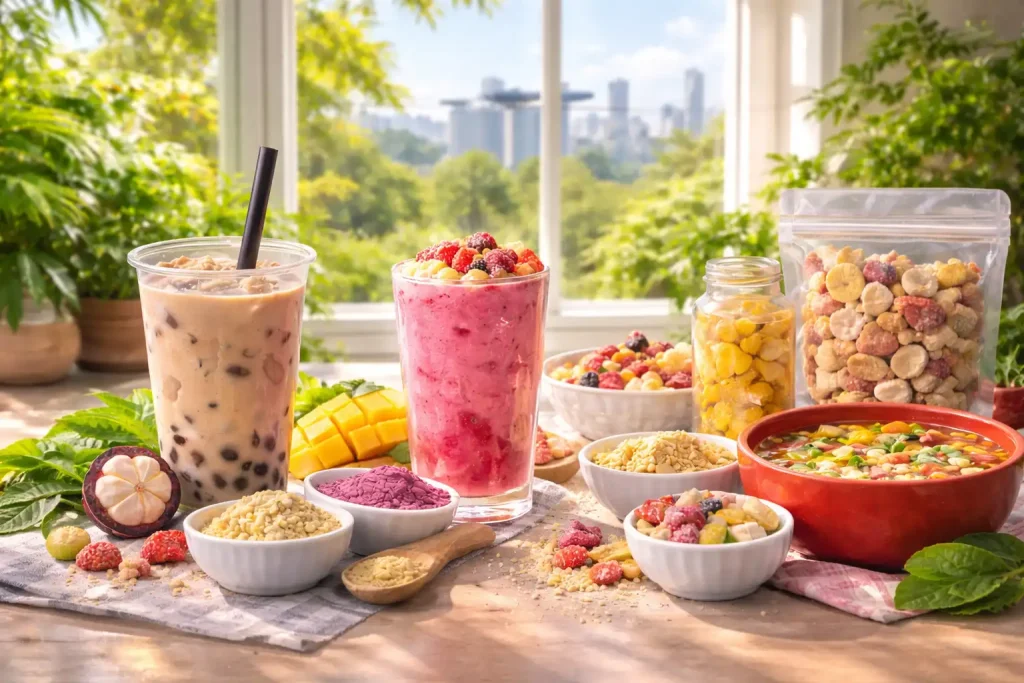
In Singapore, product innovation is often led by beverages and “better-for-you” formats. That makes system selection a practical first step because hot and cold systems fail in different ways.
Hot systems include instant soups, porridge mixes, noodle meal components, and some bakery fillings. Cold systems include ready-to-mix drinks, milk tea, yogurt-style blends, and functional beverage powders.
Here’s a simple selection map that aligns with how Singapore teams usually run trials:
| Product System | Common Singapore Categories | Preferred Ingredient Format | First Pass Acceptance Test |
|---|---|---|---|
| Hot system | Instant soup, meal cups, porridge mixes | Vegetable pieces, diced inclusions, some powders | Rehydration texture + aroma retention |
| Cold system | RTM beverages, milk tea, dairy blends | Fruit powder, tea powder, fine inclusions | Dispersion + sediment + clean finish |
If a buyer is working on soup-style concepts, it’s helpful to reference application-focused content that builds confidence in the format choice, such as Freeze-Dried Vegetable Soup Packets. If the buyer’s pipeline includes noodle-based convenience meals, a relevant knowledge reference is The Difference Between Freeze-Dried and Instant Noodles.
What Singapore Brands Are Building With Freeze-Dried Ingredients
Singapore’s development teams tend to concentrate on four “high-repeat” applications where freeze-dried ingredients offer consistent value.
Functional and Better-For-You Beverages
This is where fruit powders shine. They help teams deliver recognisable fruit character and aroma while keeping formulation control tight. The common product challenge in Singapore is not flavour creation—it’s repeatability. Brands want the same taste and mouthfeel every time, across multiple production sites or contract manufacturers.
When citrus direction is part of the concept, a contextual learning link like Uses of Freeze-Dried Lemon Slices supports product ideation without sounding like a sales pitch.
Tea-Based Drinks and Milk Tea Systems
Singapore’s tea culture is strong and commercially sophisticated. Tea-based products often require stable aroma, clean aftertaste, and reliable mixing behaviour.
A concrete product reference that matches this reality is Spray-Dried Oolong Tea Instant Powder. For teams browsing the broader solution space, your category page for Tea & Plant Extract Products is a natural next step.
Convenience Meals and Instant Soups
Freeze-dried vegetables are used to improve “real meal cues” and elevate the eating experience of convenience formats. Singapore buyers typically pay attention to rehydration texture and whether the ingredient still feels natural after a realistic preparation time.
If a buyer asks about stability and storage handling, a practical support reference is Shelf Life of Dried Fruits.
Bakery Premixes and Snack Blends
Fruit powders can create clean flavour identity in bakery and snack formulations while avoiding moisture issues. In Singapore, brands often care about “clean label perception” and taste clarity—meaning they want fruit notes that feel authentic, not artificial or overly processed.
The Tests Singapore Teams Run (And Why Some Trials Fail)
Singapore’s teams typically test with discipline. They start with a few targeted checks that predict real outcomes.
Dispersion and Sediment Behaviour
For beverage and dairy systems, they validate how quickly powder disperses, whether it clumps, and how it behaves after standing. Sediment isn’t always unacceptable, but Singapore brands tend to control it tightly because consumers notice texture changes quickly.
Aroma Clarity and Aftertaste
Singapore’s palate expectations often favour clean finishes. If aroma becomes dull after storage, or if the aftertaste feels “dusty,” the ingredient will struggle to pass internal sensory panels.
Rehydration Texture at Real Time Points
For soups and instant meals, the team observes rehydration at the actual consumer preparation time. If the vegetable stays tough, rehydrates unevenly, or feels rubbery, the product experience breaks.
Lot-to-Lot Repeatability
This is the hidden deal-breaker. Many ingredients pass a first trial but fail at scale because later lots behave differently. Singapore teams often build repeatability into their approval criteria early.
A simple way to reduce trial failures is to align format and testing to the application. When buyers are in the learning phase, pointing them to Knowledge is a helpful bridge before commercial conversations.
Expert Insights
A beverage R&D lead’s view: Singapore teams usually prototype fast, but they approve slow. The easiest way to win trust is to provide a powder that disperses cleanly, holds aroma after storage, and remains consistent across lots—because internal sensory panels and QA reviews are designed to detect variability.
A quality manager’s view: documentation isn’t “paperwork,” it’s approval speed. When a supplier can support technical questions quickly and consistently, projects move from trial to launch without getting stuck in internal review cycles.
A convenience-food developer’s view: for soups and meal cups, rehydration texture is the brand. If inclusions don’t feel natural after realistic preparation time, consumers won’t repurchase—even if the flavour is good.
A Singapore-Focused Shortlist Method That Speeds Up Approval
A shortlist method that fits Singapore’s working style is straightforward: define the product system, define the format, define the acceptance tests, then request samples only for the specs that match those tests. This avoids “testing everything,” which burns time and creates confusing results.
Here’s what buyers typically include when they request samples: the product category and system (hot or cold), the target flavour intensity, the preferred particle behaviour (powder fineness or cut size), and the expected preparation method.
When they’re ready to move from discussion to a concrete sample plan, your Contact Us page is the cleanest route.
If the buyer wants a simple baseline powder to evaluate mixing behaviour and consistency, a product reference like Freeze-Dried Corn Powder can work as a practical “benchmark” ingredient for internal comparisons.
Conclusion
Singapore brands choose freeze-dried ingredients with a verification mindset. The most reliable selection path is application-first: decide whether the system is hot or cold, select pieces or powders accordingly, and validate the tests that predict real performance—dispersion and sediment for beverages, rehydration texture for soups, aroma clarity after storage, and lot-to-lot repeatability for everything. When those fundamentals are strong, Singapore buyers move from trial to repeat orders with confidence, because the ingredient performs the same way in development, in production, and in consumers’ hands.
FAQ
What makes Singapore buyers different when sourcing freeze-dried ingredients?
They typically prioritise repeatability, documentation readiness, and performance in real production conditions, not just taste in a small lab test.
For beverage powders, what is the most important performance check?
Dispersion behaviour and sediment control after standing are usually the fastest indicators of whether a powder will work in a real consumer experience.
Why do some fruit powders taste good but fail after storage?
Aroma can dull and aftertaste can change if storage conditions and ingredient moisture behaviour are not aligned to the product system.
How do brands choose between pieces and powders?
Pieces are chosen when visible inclusions and texture cues matter. Powders are chosen when uniform flavour delivery and smooth processing are required.
What should be tested first for instant soups and meal cups?
Rehydration texture at realistic preparation time points is critical, followed by aroma retention and compatibility with seasoning and oil systems.
What causes lot-to-lot variation issues?
Changes in raw material characteristics, particle behaviour, or processing consistency can lead to different flavour intensity and performance outcomes across batches.
What information should a buyer include when requesting samples?
The application type, preparation method (hot or cold), target flavour intensity, preferred cut size or powder fineness, and expected storage conditions.
Where can buyers learn more before contacting the supplier?
They can review background and application content in the Knowledge section and then reach out via Contact Us when ready.