Freeze Dried Fruit Tea for Cafés and Brands: Menu Ideas, Steeping Tips, and Buyer Checklist
12 月-22-2025
Quick Summary
Freeze dried fruit tea is a fast-growing commercial format because it delivers real-fruit visuals, aroma, and a “clean label” story while keeping café operations simple. The key to consistent results is choosing the right fruit format (slices vs dice vs powder), controlling humidity to prevent softening, and designing steeping instructions that work for hot and cold drinks. This guide explains how cafés and beverage brands build stable fruit tea menus, how to pair fruits for repeatable flavor, what specs to request from suppliers, and how buyers standardize packaging and storage for predictable quality in daily service.
Why freeze dried fruit tea is exploding in cafés and foodservice
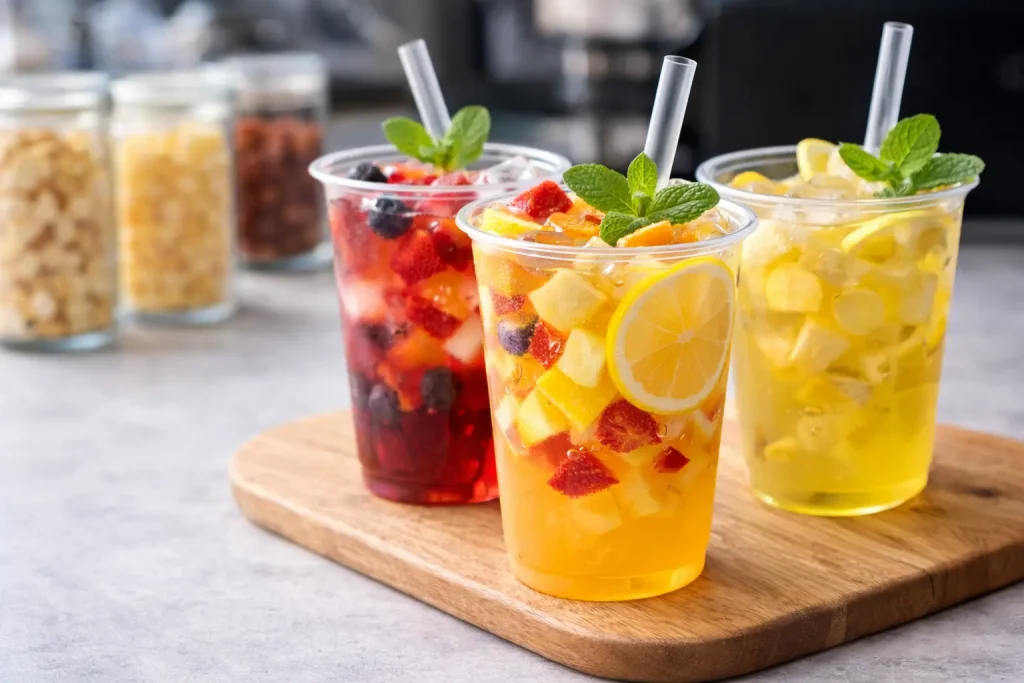
Café customers want drinks that look real, feel natural, and photograph well. Freeze dried fruit tea checks all three boxes. It offers visible fruit pieces that signal quality, it keeps the aroma fresh without messy fruit prep, and it lets operators create a menu that scales across multiple stores with consistent results.
From a B2B perspective, the commercial appeal is even clearer: freeze dried fruit tea reduces prep time, reduces spoilage loss, and makes portion control easier. When this format is done right, you get a premium experience with a simple supply chain.
For readers who are new to freeze drying, an internal learning link like the ultimate guide to freeze-dried fruit keeps them on-site while building confidence.
What “freeze dried fruit tea” actually is
Freeze dried fruit tea typically means one of two things: either a tea base that includes freeze dried fruit pieces, or a fruit-forward drink kit where fruit is the main visual and flavor layer, and tea is the supporting note. Commercially, the second format often wins because it feels more premium and is easier to customize.
The main fruit formats used are slices, dice/cubes, and powders. Each one behaves differently in steeping, appearance, and shelf stability, so choosing the wrong format is a common cause of customer complaints.
Choosing the right fruit format for café performance
Slices: best for visual impact and premium positioning
Slices look premium and are easy for customers to understand. They work well for lemon, orange, dragon fruit, and larger fruits that keep shape. Lemon is the classic anchor fruit here, and you can support a lemon-focused explanation with a natural internal reference like what freeze-dried lemon slices can be used for, because café buyers often start with lemon and then expand into colorful options.
Dice/cubes: best for balanced steeping and portion control
Dice pieces hydrate faster and distribute flavor more evenly. They are easier for portioning in busy service, and they reduce “one giant fruit piece” inconsistency across cups. This format is strong for mango, guava, apple, and mixed fruit blends.
Powders: best for flavor boosting and “consistent taste every cup”
Powders can intensify aroma and color quickly, especially in cold drinks where steeping time is limited. They are often used in combination with slices or dice to create a stronger first impression and stable flavor. If you want to route readers into a broader ingredient range without turning the article into a product page, a link like freeze-dried fruit powder options is a clean bridge.
Steeping and preparation: how cafés standardize hot and cold drinks
This is where a buyer guide becomes genuinely useful. Café operators don’t want poetry. They want repeatable SOPs.
Hot fruit tea: how to avoid “weak flavor” complaints
Hot water pulls aroma quickly, but it can also change perceived fruit brightness if the tea base is too strong. The simplest standardization method is to define two variables: fruit dose and steep time. Keep the tea base consistent, and treat fruit as a controlled ingredient system.
A practical SOP is to steep fruit first briefly to release aroma, then add the tea base to avoid over-extracting tea bitterness. This improves perceived sweetness without adding sugar.
Cold fruit tea: how to avoid clumping and uneven flavor
Cold water needs time. Café operators can’t wait forever. That’s why cold fruit tea systems often work best when they combine:
-
fruit pieces for visual impact
-
a small amount of fruit powder or extract for faster aroma
-
controlled agitation or shaking for dispersion
Cold drinks also expose the biggest operational risk: humidity pickup in opened fruit packaging. If your fruit becomes soft or sticky, the drink looks less premium and customers assume low quality.
Storage and packaging: the silent factor behind café consistency
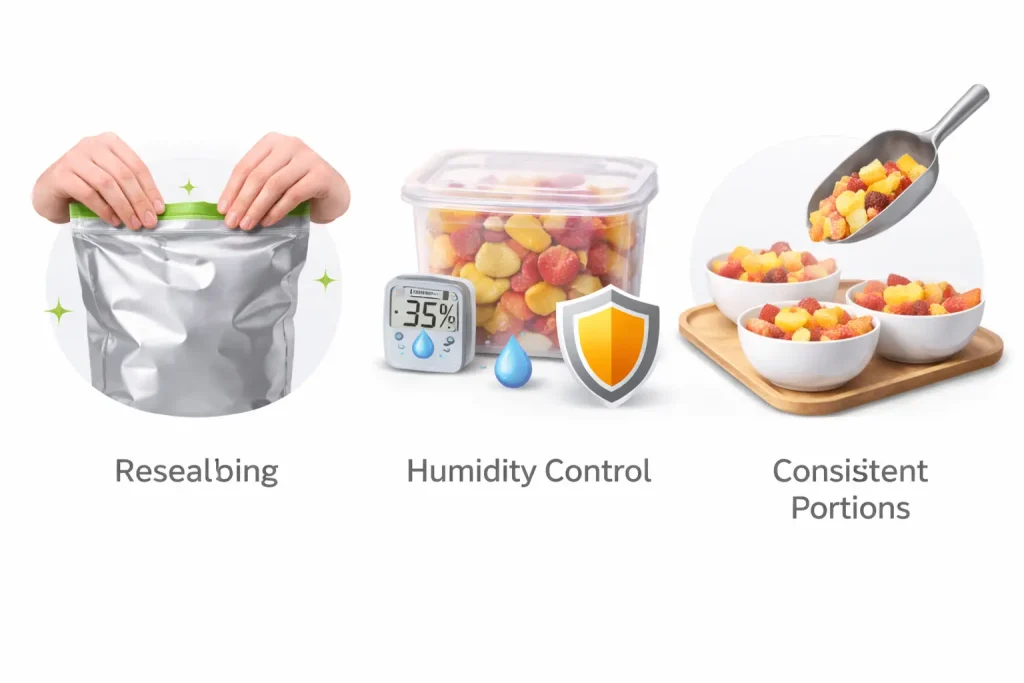
Freeze dried fruit is stable when sealed, but once opened, it behaves like a humidity magnet. This matters more in cafés because bags are opened and closed repeatedly throughout the day.
A simple operational rule that reduces waste is to use smaller pack sizes for high-humidity environments or high-traffic stores. Strong barrier packaging, fast resealing, and dry utensil discipline are not optional if you want consistent visual appeal.
If you want to reinforce shelf-life thinking without sounding dramatic, you can reference internal storage education like how long dried fruits last in a freezer, while emphasizing that cafés should focus on humidity control rather than just temperature.
Menu pairing ideas that sell (and why they work)
Café menus perform better when pairings are simple, memorable, and visually distinct. The goal is not to create 30 choices. The goal is to create 6–10 “signature” drinks that look different and feel consistent.
Citrus-forward: lemon as the anchor
Lemon is the easiest flavor to understand globally. It also performs well in both hot and cold drinks. Lemon pairs cleanly with mango, lychee, and berry blends.
Tropical: mango and guava for dessert-style drinks
Mango and guava create a “treat” feeling. If you sell mango content, you can connect the story to a product-driven page like freeze-dried mangosteen to show how tropical assortments can be expanded beyond standard fruits for premium menus.
Berry blends: blueberry as color + aroma
Berry blends are popular because they look strong on social media. They also pair well with lighter tea bases. If your site already supports blueberry powder topics, the fruit tea content becomes an internal linking hub that keeps buyers browsing multiple SKUs.
Premium novelty: durian in limited-time specials
Durian is polarizing, which makes it great for limited-time or region-specific offerings. For operators who want “durian experience” without overpowering aroma, durian powder-based applications are often easier to control. A neutral hub link like freeze-dried durian can help buyers explore without you forcing a single format.
Buyer checklist: what cafés and distributors should request
This section is where you convert reader trust into inquiries.
Specs that matter for fruit tea
Café and distributor buyers should request:
-
moisture content and water activity targets for crisp texture
-
fruit piece size tolerance and percentage of fines/dust
-
aroma retention and color stability expectations in hot and cold use
-
microbiological limits and lot-based testing approach
-
packaging barrier specifications and reseal practicality
What information speeds up quoting
Buyers should share:
-
target drink type (hot, cold, sparkling)
-
expected daily cups and seasonal peaks
-
desired pack size and storage environment
-
whether the fruit is used as a hero visual or as a supporting note
If you want to keep browsing smooth without forcing a product SKU, rotating a category link such as this category page is a clean internal path.
Common mistakes cafés make (and how to prevent them)
Using only slices for cold drinks
Slices alone often steep slowly in cold water. Operators then overcompensate with more fruit and create cost and consistency problems. A better approach is combining slices with a small amount of powder or a fast-aroma component.
Storing opened fruit near steam and heat
Steam kills crunch. If fruit is stored near the hot-water station, it will absorb humidity and soften quickly. The drink will look worse and customers will assume poor quality.
Making the menu too complex
Too many fruit combinations create training problems and inconsistent outcomes. A small “signature set” with standardized dosing wins more reliably.
Conclusion
Freeze dried fruit tea is a high-performing café and beverage format because it delivers real-fruit visuals and aroma while keeping operations scalable. The brands and cafés that succeed choose the right fruit format for the drink style, standardize steeping for hot and cold systems, and treat humidity control as a core quality variable. When packaging, storage discipline, and dosing are controlled, fruit tea becomes a repeatable premium product rather than a “looks good once” experiment.
Semantic Insight Loop
Build a café fruit tea system like a production SOP: define hot vs cold preparation first, then match fruit format to steeping behavior. Use slices for premium visuals, dice for portion consistency, and a small powder component when cold speed matters. Finally, protect quality by designing storage and packaging around humidity control, because that single factor decides whether fruit stays crisp and photogenic every day.
FAQ
1) What is freeze dried fruit tea used for in cafés?
Freeze dried fruit tea is used to create fruit-forward drinks with real fruit visuals and aroma, including hot teas, iced teas, sparkling fruit teas, and café signature seasonal beverages.
2) Which fruit format is best for cold fruit tea?
Cold fruit tea often performs best with a combination of fruit pieces for visuals and a small powder component for faster aroma release, because slices alone can steep slowly in cold water.
3) How should cafés store freeze dried fruit after opening?
After opening, cafés should reseal quickly, keep fruit away from steam and humidity, use dry utensils, and consider smaller pack sizes in humid environments to prevent softening and clumping.
4) Why does freeze dried fruit sometimes become soft in fruit tea service?
Softening is usually caused by humidity pickup during storage or repeated opening in a humid café environment. High-barrier packaging and good reseal discipline reduce texture loss.
5) What specifications should I request when sourcing fruit tea ingredients?
Buyers typically request moisture and water activity targets, piece size tolerance, aroma and color expectations, microbiological limits, and packaging barrier specifications for stable café performance.