How to Choose the Right Freeze-Dried Ingredients for Instant Meals
12 月-27-2025
How to Choose the Right Freeze-Dried Ingredients
A practical buyer’s guide to selecting freeze-dried fruits, vegetables, and powders that deliver better taste, faster rehydration, longer shelf stability, and consistent quality in ready-to-eat recipes.
Why Instant-Meal Brands Are Switching to Freeze-Dried Ingredients
Instant meals are no longer just “emergency food.” Consumers now expect cleaner labels, real-ingredient taste, and repeatable texture—even in a product that’s prepared in minutes. Freeze-dried ingredients fit that expectation because they can deliver strong flavour and good nutrient retention while keeping your formulation shelf-stable.
For product developers, the real advantage is control: you can design the eating experience (aroma, bite, colour, rehydration speed) with much more precision than with many conventional dried inputs. That’s why freeze-dried fruits, vegetables, and powders are showing up everywhere—from instant soups to meal cups to functional beverage sachets.
If your product roadmap includes more instant recipes, it’s worth building an ingredient selection logic that your R&D, purchasing, and QA teams can all follow—so every new SKU doesn’t feel like reinventing the wheel.
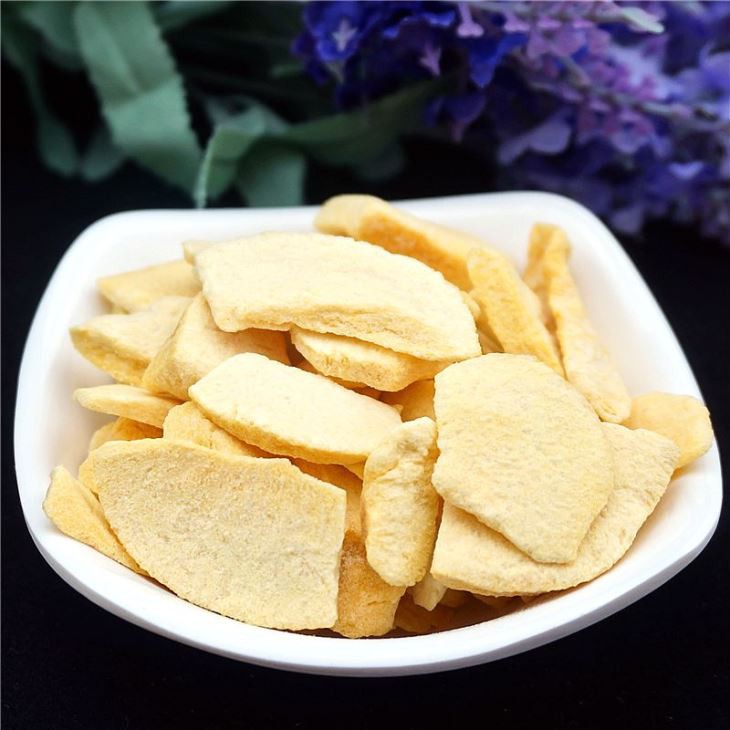
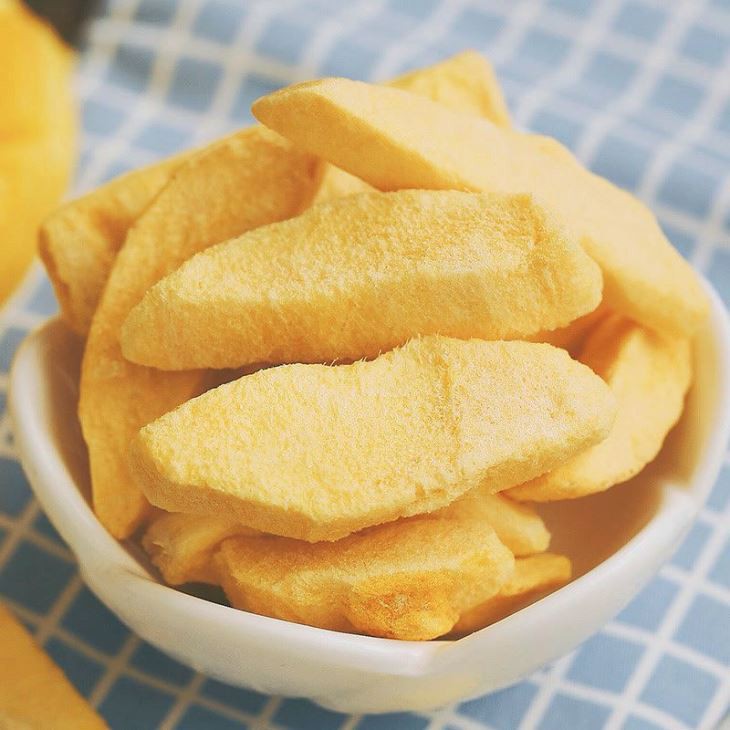
Start With the Eating Scenario, Not the Ingredient List
Before you compare suppliers, decide what the consumer is actually doing when they eat your product. Instant meals usually fall into three scenarios, and each scenario changes what “good ingredient” means:
A cup meal eaten at a desk needs fast rehydration, no grit, and consistent portioning. A home bowl meal can tolerate slightly longer hydration time but must deliver better texture and a “fresh-cooked” impression. Outdoor/camping style meals often prioritise high caloric density and rugged performance in variable water temperature.
Once you pick the scenario, you can set non-negotiables: hydration time target, water temperature range, preferred mouthfeel, and acceptable variability. That becomes your selection checklist.
Key Selection Criteria That Actually Affect Final Eating Quality
Freeze-dried inputs can look similar on a spec sheet but behave very differently in a recipe. These factors usually decide whether the final meal feels premium or “powdery.”
Rehydration speed and texture recovery matter most for instant meals. Ingredients with thin cell structure (many leafy vegetables) can rehydrate quickly but turn mushy if over-hydrated. Denser pieces (carrot dices, some fruit dices) may need a longer soak or smaller cut size.
Cut size and uniformity affect both appearance and portion control. If your meal must look consistent across markets and batches, uniform particle distribution is not optional—it’s your brand identity in a bowl.
Flavour intensity should match the recipe’s base. Some freeze-dried vegetables deliver clean aroma; others carry stronger “green notes.” Your job is not to chase the strongest flavour—it’s to chase the right flavour after rehydration.
Powder behaviour is a separate universe. Freeze-dried fruit powder is great for flavour and colour, but it can clump if humidity control is weak or if your blend includes hygroscopic components. If you sell powder-based instant drinks, your testing should include dissolution and sediment checks.
If you want a quick view, use this as a working selection table for your team.
| Instant Meal Type | Best-Fit Freeze-Dried Inputs | What to Test First | Common Failure Mode |
|---|---|---|---|
| Instant soup / stew | vegetable dices, mixed vegetable blends | hydration time, texture after 5–8 min | soggy veg, floating skins |
| Noodle soup cups | small-cut veg, spring onion, corn, mushroom | flavour balance + rehydration in 90–100°C | uneven rehydration, weak aroma |
| Rice or porridge cups | vegetable dices + fruit powder (for sweet lines) | mouthfeel and particle settling | gritty powder, clumping |
| Ready-to-mix beverages | freeze-dried fruit powder, instant tea powder | solubility + sediment after 3 min | clumps, chalky finish |
Build Your Ingredient Basket by Category
Instead of picking “a supplier,” build an ingredient basket that covers your whole pipeline. Most instant-meal brands do better when they standardise inputs by category.
Freeze-Dried Vegetables
Vegetables are the backbone of savoury instant meals because they provide visible “real food” cues. Focus on piece geometry (dice, slice, granule) and rehydration behaviour. If you plan to launch multiple SKUs, align vegetable cuts across recipes to reduce complexity.
If your product line includes vegetable-forward applications, it’s also useful to map internal content and categories so Google understands your topical expertise. A natural internal anchor for that on your site is the Dried Foods category page: https://www.lixingfdfoods.com/dried-foods
Freeze-Dried Fruits and Fruit Powders
Fruits are powerful in two directions: sweet instant meals (oat cups, dessert bowls) and flavour systems (acid balance, aroma lift) in beverages and functional blends. For powders, define your target: colour, flavour, acidity, or all three.
If you’re building a powder-driven portfolio, place your pillar relevance under Freeze-Dried Fruit Powder: https://www.lixingfdfoods.com/freeze-dried-fruit-powder
Instant Tea Powder and Tea Concentrates
Instant tea powder is a strong engine for instant beverage lines and hybrid products like “tea + fruit” sachets. What matters here is solubility, aroma fidelity, and stability across different water temperatures.
If you want a concrete internal product example for contextual linking, you can reference Spray-Dried Oolong Tea Instant Powder naturally inside your tea section: https://www.lixingfdfoods.com/products/instant-tea/instant-tea-powder-concentrates/spray-dried-oolong-tea-instant-powder.html
Expert Insights Your Team Can Use in Spec Meetings
Here are three practical expert-style perspectives you can use when aligning R&D and purchasing—without turning the meeting into a feelings contest.
A food technologist’s view: prioritise “post-rehydration sensory” over dry appearance. The dry piece can look perfect but still rehydrate into a fibrous, unpleasant bite. Define your acceptance criteria in the prepared state, not just raw specs.
A QA manager’s view: moisture control is your quiet profit lever. Freeze-dried ingredients can absorb moisture quickly. If your upstream storage or packaging integrity slips, you’ll see clumping, off-notes, and reduced shelf stability. Treat humidity as a quality parameter, not a warehouse detail.
A product developer’s view: standardise cut size families. If every SKU uses a different particle size, your manufacturing and blending variability will expand. Standard families (small dice, medium dice, powder) make scale-up smoother and customer experience more consistent.
How to Evaluate a Freeze-Dried Ingredient Supplier
When you’re sourcing at scale, quality is not a single checkbox—it’s a system. Use this supplier evaluation logic so procurement doesn’t buy “cheap problems.”
Start with facility capability and process consistency: stable output requires stable equipment, stable protocols, and a controlled environment. For Fujian Lixing Foods Co., Ltd., that story is straightforward: a dedicated freeze-dry area of over 80,000 square meters, established export capability, and a technical R&D team supporting product development. If you want to present the company profile clearly inside your content hub, link your About page in a natural “manufacturer background” context: https://www.lixingfdfoods.com/about-us
Then validate food safety and compliance. Certifications don’t replace your audits, but they do reduce uncertainty for international buyers. Fujian Lixing Foods lists BRC, HACCP, ISO9001, ISO22000, KOSHER, HALAL, and organic processing credentials in its company introduction, which is useful when your buyers are comparing supplier readiness across regions.
Finally, test application fit, not just lab fit. Run small pilot batches in your real recipe, with your real filling/packing process, in your real distribution plan. Instant-meal success is always “ingredient + processing + storage” together.
For this article, a clean internal linking set looks like this:
For deeper educational content, point readers to your Knowledge module: https://www.lixingfdfoods.com/news_catalog/knowledge
For buyers ready to move, use a simple CTA link to Contact/RFQ: https://www.lixingfdfoods.com/contact-us
If you reference specific applications, you can also cite related internal articles such as Shelf Life of Dried Fruits for storage context: https://www.lixingfdfoods.com/news/how-long-can-dried-fruits-last-in-freezer
Conclusion
Choosing freeze-dried ingredients for instant meals is not about picking the “best ingredient” in isolation—it’s about picking the best ingredient for the eating scenario, hydration conditions, and manufacturing realities you actually have. If you define the prepared-state targets first (taste, texture, hydration time, and stability), your sourcing becomes simpler, your product quality becomes more repeatable, and your future SKU development gets faster.
If you want to turn this into a repeatable workflow across your whole 20-article plan, your next step is to standardise ingredient families (vegetable cuts, fruit powders, tea powders) and align each SKU to those families. For partnership and sampling requests, you can route buyers directly through your contact page: https://www.lixingfdfoods.com/contact-us
FAQ
What freeze-dried ingredients work best for instant soups?
Vegetable dices and balanced blends usually perform best because they rehydrate into visible “real food” pieces. Prioritise uniform cut size and test texture after full hydration, not just at the first minute.
How do I prevent clumping in freeze-dried fruit powder blends?
Control humidity during storage and blending, use moisture-resistant packaging, and validate powder flow in your real production environment. Also test how the powder behaves after opening, since consumer handling can introduce moisture.
Are freeze-dried ingredients suitable for ready-to-eat meal cups?
Yes, especially when you need long shelf stability and fast preparation. The key is matching cut size and rehydration behaviour to your target water temperature and time-to-eat.
What quality tests matter most for instant meal applications?
Rehydration speed, texture recovery, aroma in the prepared state, and stability under storage conditions. If you ship globally, add transport simulation and shelf testing under realistic humidity exposure.
How should I choose between freeze-dried pieces and powders?
Pieces deliver visual appeal and bite, while powders deliver fast flavour and colour integration. Many successful instant products use both: pieces for “real food” cues and powders for flavour lift.
Can freeze-dried vegetables lose flavour over time?
They can if moisture or oxygen exposure increases. Good packaging and stable storage conditions help protect flavour and aroma until the end of shelf life.
What makes a freeze-dried ingredient supplier reliable for export markets?
Consistent production capability, food safety systems, export experience, and clear documentation. A supplier’s certifications and QA process matter, but your final decision should come from application testing in your own recipe.